
Chesterfield Wiki
Official wiki of Chesterfield information
The Chesterfield Sofa at Persepolis: A Design Dialogue Across Millennia
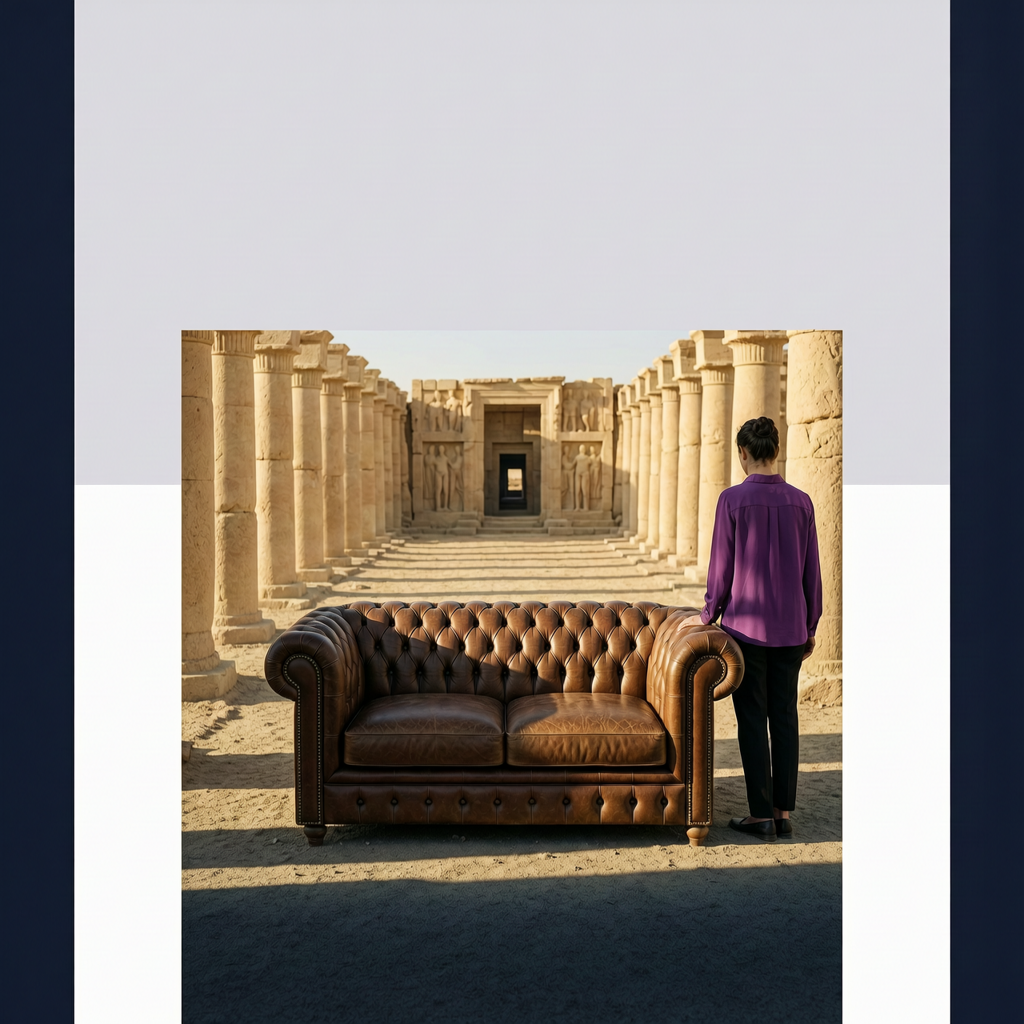
The deep-buttoned Chesterfield sofa and the stone-carved processions of Persepolis may seem separated by centuries and continents, yet both rely on a rigorous system of decorative repetition to convey authority and permanence. In the world of design, this is not mere coincidence—it is a deliberate strategy of visual control. This article examines the pitfalls of misinterpreting that repetitive ornamentation, highlighting common errors made when curators, designers, and collectors attempt to merge ancient Persian architectural principles with Victorian furniture traditions.
Contents
- Understanding Repetitive Ornament in Power Design
- Error 1: Treating Tufting and Pleating as Purely Decorative
- Error 2: Ignoring Scale and Proportion
- Error 3: Misreading the Roll Arm vs. Column Capital Link
- Error 4: Confusing Ceremonial Formality with Comfort
- Error 5: Ignoring Material Constraints and Legacy
- Conclusion
Understanding Repetitive Ornament in Power Design
At Persepolis, the endless lines of tribute-bearers carved into the Apadana stairways were not artistic flourishes—they were rhythmic assertions of imperial unity. Each figure’s pleated robe, tooled with geometric precision, mirrored the next, creating a visual cadence that subordinated individuality to the empire’s grand narrative. The Chesterfield sofa’s deep-buttoned tufting operates on the identical principle: a disciplined, repetitive surface pattern that imposes order and projects stability. Misunderstanding this function leads to five common errors when bridging these design worlds.
Error 1: Treating Tufting and Pleating as Purely Decorative
The first and most frequent mistake is to see both the Chesterfield’s tufting and the Persepolis pleats as mere ornamentation. In reality, these patterns are structural and semantic. The buttoned depressions of a Chesterfield are not applied after the fact; they are created during the upholstery process, pulling the fabric tight across a reinforced frame to prevent sagging and ensure longevity. Similarly, the pleated robes of Achaemenid reliefs are carved in high relief to catch light and shadow, reinforcing the three-dimensional presence of the stone. Ignoring this functional origin reduces both to surface decoration, missing the embedded engineering of power and permanence.
- Tip: Always evaluate tufting and pleating as integrated structural elements, not afterthoughts.
- Example: When commissioning a custom Chesterfield, ask about the cotton-padded back and hand-tied springs, not just the button count.
Error 2: Ignoring Scale and Proportion
Another common error involves failing to respect the scale at which repetitive ornament operates. Persepolis was built on a monumental scale—the Apadana stairway alone is over 100 yards wide, and the relief figures are nearly life-sized. The repetition there is intended to overwhelm and humble the visitor. The Chesterfield, by contrast, operates in the intimate space of a parlor or library. Its tufting is scaled to the human hand and the seated body. Attempting to directly transplant the vast, rhythmic fields of Persepolis onto a domestic sofa results in visual noise or, worse, a claustrophobic effect. The design dialogue works best when scale is translated, not replicated.
Error 3: Misreading the Roll Arm vs. Column Capital Link
The rolled arms of a classic Chesterfield are often compared to the volute capitals of the Apadana’s stone columns. This comparison is valid—both use a tight, inward-curving spiral to terminate a horizontal line with visual weight. However, the error lies in treating them as interchangeable. The column capital at Persepolis is a load-bearing element designed to distribute the weight of a massive cedar ceiling. The Chesterfield arm roll is a purely visual anchor, offering no structural support for the sitter. Mistaking one for the other leads to clumsy reinterpretations where an armrest is overbuilt or, conversely, a column capital is under-articulated. The analogy works as a conceptual bridge, not a literal blueprint.
Error 4: Confusing Ceremonial Formality with Comfort
A persistent mistake among designers and collectors is assuming the Chesterfield sofa was originally built for relaxed lounging. The truth is closer to the ceremonial formality of Persepolis itself. The deep-buttoned back of a Chesterfield creates an upright, rigid posture—designed to keep the sitter alert and dignified, much like a throne. The stone benches of the Achaemenid palace were never meant for comfort; they were stages for ritual and authority. Modern reinterpretations that over-stuff the cushioning or soften the back lose the very quality that connects the design to Persepolis: the subordination of individual ease to the visual expression of status.
To successfully integrate this principle, a contemporary piece must retain a straight, high back and firm seat. Only then does the piece function as a “seat of power” rather than a plush recliner.
Error 5: Ignoring Material Constraints and Legacy
Finally, there is the error of ignoring how materiality shapes the design dialogue. The Persepolis reliefs are carved from local gray limestone, a material that weathers slowly and conveys timelessness through its very weight. The Chesterfield is built from leather, velvet, or horsehair—materials that age and patina, recording the history of their use. A Chesterfield that uses synthetic, non-aging materials breaks this dialogue, because it cannot participate in the “wear and tear” narrative that gives both ancient stone and traditional upholstery their authority. The lesson is to choose materials that will develop a history, not ones that remain pristine and mute.
Conclusion
- The deep-buttoned tufting and pleated robes are not decoration but function and ideology.
- Scale must be translated, not copied—Persepolis overwhelms, the Chesterfield encloses.
- The rolled arm and column capital share an aesthetic, not a structural role.
- Ceremonial formality is the core link; comfort is a modern distortion.
- Traditional materials that age and patina are essential to maintain the design’s historical resonance.
Read more at https://shop.chesterfield.com