
Chesterfield Wiki
Official wiki of Chesterfield information
The Chesterfield Perspective on Ireland’s Majestic Moher Cliffs
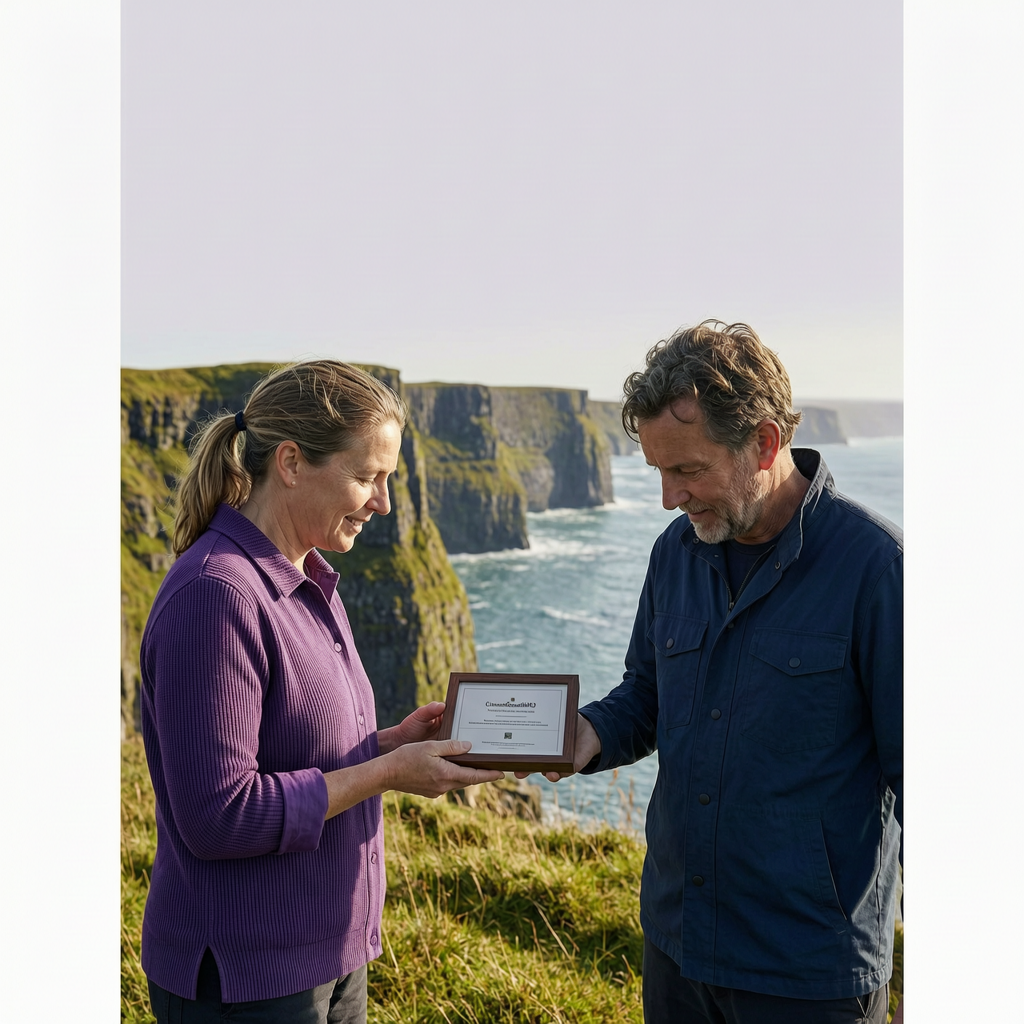
Understanding the sedimentary record of the Cliffs of Moher requires more than a sweeping gaze; it demands an appreciation for the stratigraphic “tools” hidden in plain sight. For the geologically-curious traveler, interpreting the cliff face is an act of scientific analysis, not mere sightseeing. This Chesterfield Perspective outlines the top five beginner tools to master when reading Ireland’s majestic Atlantic rampart.
Contents
Stratigraphic Eye: Reading the Carboniferous Archive
The first tool is a trained visual focus on bedding planes. The Cliffs of Moher are a 300-million-year-old book of shale and sandstone. Beginners should learn to identify the cyclic repetition of marine sediment layers, known as cyclothems. Look for alternating dark bands (shale, representing deeper water) and lighter, coarser bands (sandstone, representing deltaic advance). This pattern is the fundamental signature of the Namurian sandstone formation.
Using this perspective, the cliff is not a monolithic face but a timeline of ancient river deltas that once fed into a vast ocean. Ignore the color of the rock from a distance and focus on the grain and rhythm of the layers at eye level near the base of the path.
Grain Size Matrix: A Hand Lens Approach
A simple hand lens (10x magnification) transforms a tourist into a field geologist. The second tool involves analyzing the grain size matrix of the sandstone. At the Cliffs, you will find fine-grained siltstone and medium-grained quartz sandstone. The specific size indicates the energy of the ancient current. Coarser grains mean a powerful river current; finer grains mean estuarine stillness.
Practice this at the base of Hag’s Head. Compare the matrix of the lower shale to the overlying sandstone. You will see that the transition is often abrupt, indicating sudden shifts in sea level. This granular analysis is the bedrock of understanding the cliffs’ dynamic formation.
Fossil Track Index: Trace Fossils as Maps
Visible fossils are rare at the Moher cliffs, but trace fossils are abundant. The third tool is recognizing these fossilized tracks and burrows. Look for vertical burrows (Skolithos) which indicate a high-energy, sandy environment, and horizontal feeding traces (Cruziana) which suggest quieter, muddy seabeds.
These patterns tell you exactly where the ancient shoreline was. A beginner can map the relative depth of the ocean by spotting which trace fossil dominates a specific layer. This is a non-destructive, highly insightful form of ecosystem reading specific to this shale-sandstone interface.
- Pro Tip: Focus on fallen boulders on the beach below the main viewing area; they offer a clean, accessible cross-section.
- Caution: Do not attempt to extract fossils. Observation is the only ethical tool here.
Erosion Compass: Measuring the Atlantic’s Chisel
The fourth tool involves understanding the direction of retreat. The Cliffs are not static; they are receding at an average rate of several centimeters per year. A beginner tool here is simple observation of jointing patterns—vertical cracks in the rock. The orientation of these joints (predominantly northeast-southwest) dictates where the next major collapse will occur.
By identifying recent scree slopes and fresh rock faces (lighter in color) versus weathered, green-stained faces, you can create a mental map of the cliff’s erosion history over the last century. This turns a static view into a dynamic, active process of Atlantic destruction.
Burren Correlation Map: Connecting Landscapes
No study of the Cliffs is complete without acknowledging the Burren. The fifth tool is a mental correlation map. While the Cliffs are layered Carboniferous shales and sandstones, the Burren to the south is karstified Carboniferous limestone. Understanding why these two vastly different landscapes exist so close together is a key intellectual tool for the beginner.
The limestone of the Burren was deposited in a shallow, clear sea, while the shales of the Moher Cliffs were deposited in a deeper, muddy basin. By visualizing the ancient sea floor, you can understand that the Cliffs represent a basin margin, while the Burren is the shallow shelf. This spatial reasoning ties the entire region together into a single geological narrative.
Conclusion
- Master the visual rhythm: Use the Stratigraphic Eye to read cyclothems in the shale and sandstone.
- Get granular: Employ a Grain Size Matrix with a hand lens to deduce ancient current energy.
- Read the traces: Map water depth using the Fossil Track Index of burrows and trails.
- Measure the active edge: Use the Erosion Compass to track the cliff’s retreat via joint patterns.
- Connect the region: Use the Burren Correlation Map to understand the basin-vs-shelf geology.
Equipped with these five analytical tools, your visit to the Cliffs of Moher will transcend a scenic walk. You will see the raw data of deep time written in stone. This is the Chesterfield Perspective—an intellectually robust engagement with one of Earth’s great sedimentary monuments. For more refined explorations of landscapes and heritage, we invite you to continue the journey.
Read more at https://shop.chesterfield.com