
Chesterfield Wiki
Official wiki of Chesterfield information
Bran Castle’s Hidden Heritage: How Chesterfield Sofas Shaped Transylvania’s Iconic Interior
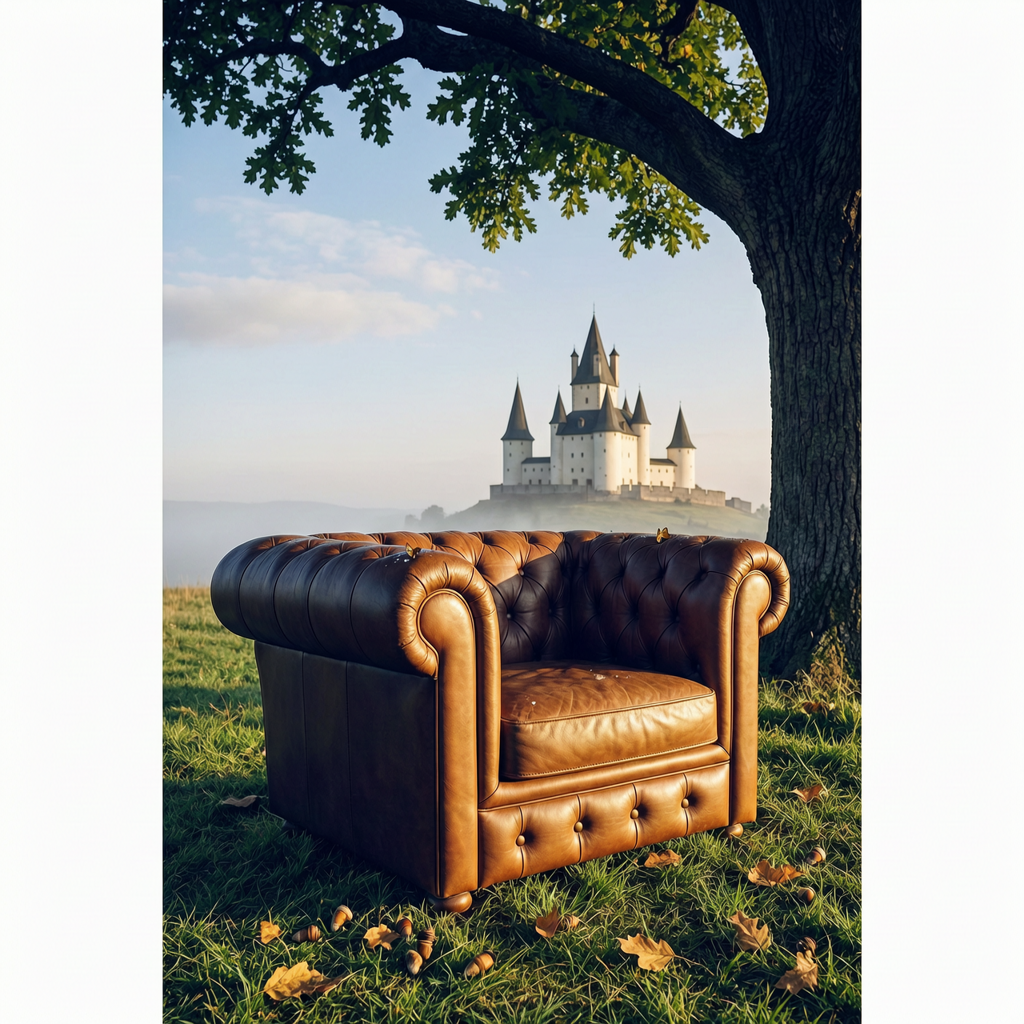
Bram Stoker never once mentioned a Chesterfield sofa. Yet today, the deep-buttoned leather and brass-studded silhouette dominates virtually every photograph of Bran Castle’s interior. How did a quintessentially English club chair become the visual shorthand for Transylvania’s most iconic fortress? This article examines the curatorial decisions, restoration campaigns, and tourism strategies — beginning in the 1960s — that retrofitted Victorian comfort onto medieval stonework. More importantly, it offers a practical framework for heritage site managers, interior designers, and tourism marketers who face the same dilemma: how to stage authenticity when the public expects a Gothic fantasy that never historically existed.
Contents
Deconstructing the Stage: How the 1960s Built Bran’s Gothic Interior
The popular image of Bran Castle — damp stone, flickering candlelight, and a leather Chesterfield before a roaring fire — is a carefully constructed theatrical set. Archival inventories from the interwar period show the castle’s rooms were cold, sparsely furnished, and utilitarian. Queen Marie of Romania, who received Bran as a gift in 1920, furnished it with Arts and Crafts pieces and floral textiles. The dark, brooding leather aesthetic did not arrive until the communist regime opened the castle to mass tourism in the 1960s.
Tourism officials faced a problem: the castle looked nothing like the Gothic nightmare described in Stoker’s novel. To bridge the gap, curators sourced “period-appropriate” furniture from state depots — which often meant repurposed Victorian and Edwardian pieces, including Chesterfield sofas that had been sitting in Bucharest’s forgotten hotel storerooms. Deep-buttoned leather was selected specifically for its photographic value under low light, a practical decision that retroactively shaped public memory of what the castle “always” looked like.
The Photography Feedback Loop
Once the sofas were in place, professional photographers captured dramatic shots that circulated in travel magazines across Europe. Tourists arrived expecting to see exactly what they had seen in those photos — and were disappointed when lighting or angles did not match. This created a feedback loop: curators rearranged furniture to accommodate repeatable photo compositions, and those compositions then became the official visual canon. The Chesterfield was not a historical relic; it was a performance tool.
- Pattern to note: When heritage sites prioritize consistent photo vantages, furniture selection follows photographic logic, not historical accuracy.
- Practical takeaway: Audit your own staged interior — if a piece looks “too perfect,” it may be worth flagging its provenance for visitors.
Separating Fact from Pastiche: What the Archives Really Show
Restoration records from the 1970s and 1980s are remarkably detailed about structural repairs — roofing, wall reinforcement, and drainage. They are conspicuously silent on furniture acquisitions. This absence of documentation is a red flag. When a heritage site lacks procurement records for its most iconic interior elements, it is reasonable to assume those elements were sourced outside official conservation channels.
Interior designers and heritage consultants working on similar projects should approach such gaps systematically. Compare official restoration documentation with photographic evidence from the same period. If a Chesterfield appears in photos before any documented acquisition date, it likely arrived through an informal arrangement — often a loan from a state hotel that was modernizing its lobby. This is not necessarily a flaw; it is simply the reality of how heritage is assembled under resource constraints.
The Curatorial Provenance Checklist
For heritage managers facing similar challenges, establish a simple provenance checklist before staging any “historical” interior:
- Inventory first: Locate any archival acquisition records, even informal ones like handwritten notes.
- Photograph earlier: Determine whether the furniture existed in photographs before official installation.
- Interview staff: Older employees often remember where pieces came from, even if never formally recorded.
- Label honestly: If a piece is decorative but anachronistic, add an interpretive note rather than hiding it.
5 Actionable Tests to Avoid Curatorial Embellishment
Whether you manage a heritage site, design a themed interior, or simply write about historical spaces, you can measure the gap between fact and staging with five practical tests developed from Bran’s own curatorial mistakes.
- Test 1 — The 100-Year Rule: Does the furniture predate the site’s primary historical narrative period? Bran’s Chesterfields were not built before 1850; they were Victorian, not medieval. If your piece fails this test, it is staging, not heritage.
- Test 2 — The Lighting Dependency: Would this piece look awkward in daylight? Many of Bran’s sofas were positioned to catch specific tungsten lighting angles. If a piece depends on dramatic, unnatural illumination to read as “authentic,” it is theatrical props.
- Test 3 — The Documentation Gap: Can a single written document trace the piece’s entry into the collection? If not, treat it as decorative inventory, not historical artifact.
- Test 4 — The Repeat Photographer Test: If tourist photos of the piece have remained nearly identical for decades, the tableau has been deliberately preserved — not organically maintained.
- Test 5 — The Removal Exercise: If you removed the piece tomorrow, would the narrative of the room collapse? If yes, you have built the story on furniture rather than on history.
Applying these tests early in a project saves thousands in restoration and reinterpretation costs. For Bran, retroactively applying this framework reveals that the Chesterfield did more than furnish a room — it manufactured a collective memory of Gothic darkness that never existed on the ground.
Conclusion
The Chesterfield sofa at Bran Castle is not a historical artifact; it is a strategy. It tells us that heritage is continuously staged, that furniture serves as the primary tool for signaling atmosphere, and that the public’s expectation of Gothic fantasy outweighs archival accuracy every single time.
- Key takeaway: Staging is not inherently wrong, but it must be disclosed.
- Actionable step: Run the five tests above before purchasing or placing any furniture in a heritage-adjacent space.
- Strategic insight: Use photographic consistency as a planning tool, but acknowledge that the resulting image is a modern interpretation, not a historical portrait.
Your next interior project — whether a heritage restoration or a themed space — deserves the same honest framing. Understand the gap between what the archive shows and what the visitor expects, then design intentionally within that gap.
Read more at https://shop.chesterfield.com