
Chesterfield Wiki
Official wiki of Chesterfield information
Assembling and Disassembling Your Chesterfield Sofa: A Practical Guide
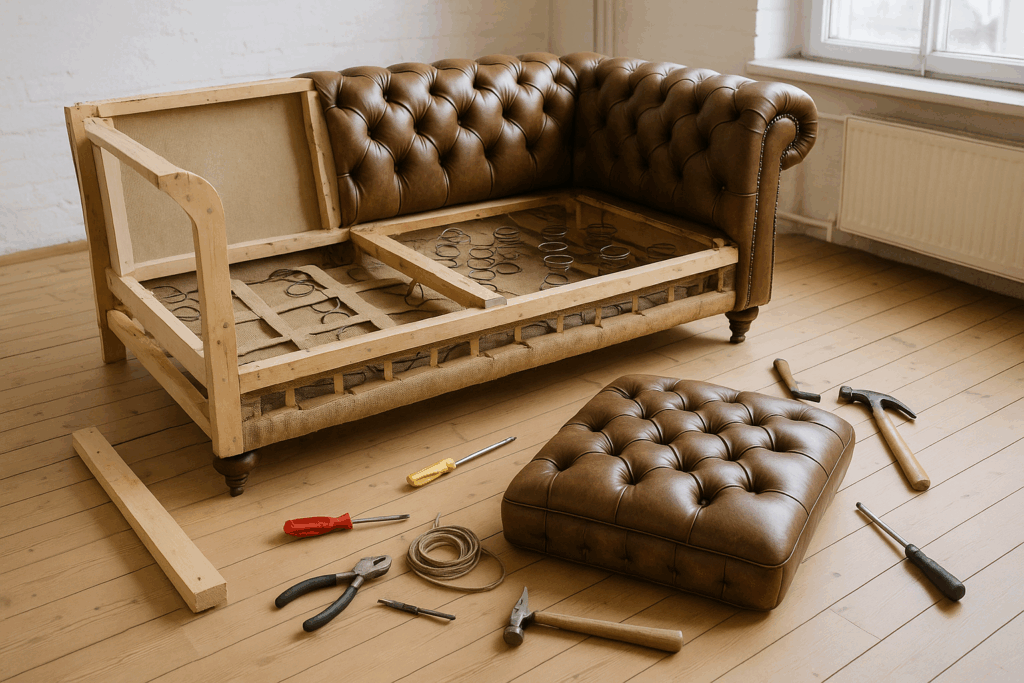
When investing in a Chesterfield sofa, one practical question often arises: can it be disassembled for easier transport or to fit through narrow spaces? This guide explores the modularity and construction of Chesterfield sofas, offering insights into how their timeless design accommodates modern moving challenges.
Contents
Chesterfield Sofa Construction: Built to Last
The iconic Chesterfield sofa is renowned for its durability, a direct result of its traditional construction methods. These sofas typically feature a solid hardwood frame, often kiln-dried to prevent warping, which is joined using mortise and tenon or double-doweled techniques for exceptional strength. This creates a single, robust unit that is not designed to be regularly taken apart. The deep button tufting and rolled arms are integral to this unified structure, contributing to both its classic aesthetic and its long-lasting resilience.
Disassembly Possibilities and Limitations
While the main frame is a permanent assembly, some Chesterfield models offer partial disassembly to facilitate moving. The most common removable parts are the legs, which are often attached with bolts or sturdy screws. Unscrewing these can reduce the sofa’s height significantly, making it easier to maneuver through doorways. In some larger or modern interpretations, the back or the arms might be detachable. However, this is not standard for traditional designs, and attempting to force apart a permanently joined frame can cause irreparable damage to the wood and upholstery.
- Check the Manufacturer: Always consult the product documentation or contact the retailer directly to confirm if your specific model has any disassembly features.
- Leg Removal is Key: In most cases, removing the legs is the primary and safest way to reduce the sofa’s dimensions for transport.
- Professional Assessment: For complex moves, consider hiring professional movers who are experienced with high-end furniture and can assess the best approach.
Expert Tips for Transporting Your Sofa
Successfully moving a Chesterfield sofa requires careful planning. Before the move, meticulously measure the sofa’s dimensions (with legs removed, if possible) and all pathways, including doorframes, hallways, and stairwells. Protect the sofa by wrapping it in moving blankets or soft cloth to prevent scratches, especially on delicate leather or velvet. When lifting, avoid putting pressure on the arms or back, and use a dolly to support the weight from underneath. The goal is to navigate the sofa as a single, protected unit rather than attempting risky disassembly.
- Measure Twice, Move Once: Accurate measurements of the sofa and your route are the most critical step in avoiding moving day disasters.
- Protect the Upholstery: Use plastic wrap over the protective blankets to shield against dust and moisture, but avoid direct contact with the fabric for extended periods.
- The “Pivot” Method: Often, carefully tilting and pivoting the sofa is the most effective way to navigate tight corners without causing stress to the frame.
Conclusion
Understanding the construction of your Chesterfield sofa is key to a successful move. To recap the essential steps:
- Traditional Chesterfields are built as a single, sturdy unit and are not designed for full disassembly.
- Focus on removable parts like legs and always consult the manufacturer for specific guidance.
- Prioritize protective wrapping and strategic maneuvering over forceful disassembly to preserve your investment.
- Proper planning and measurement are non-negotiable for a stress-free moving experience.
- When in doubt, enlisting professional help can prevent costly damage to your timeless piece.
Read more at https://blog.chesterfield.com/category/chesterfield/do-chesterfield-sofas-come-apart/
Explore Our Chesterfield Collection | Living Room Furniture | Chesterfield Armchairs | Blog Sitemap | House of Chesterfield Sitemap | Powered by CCombox