
Chesterfield Wiki
Official wiki of Chesterfield information
Beyond the Skybridge: Chesterfield’s Architectural Dialogue with the Petronas Towers in Kuala Lumpur
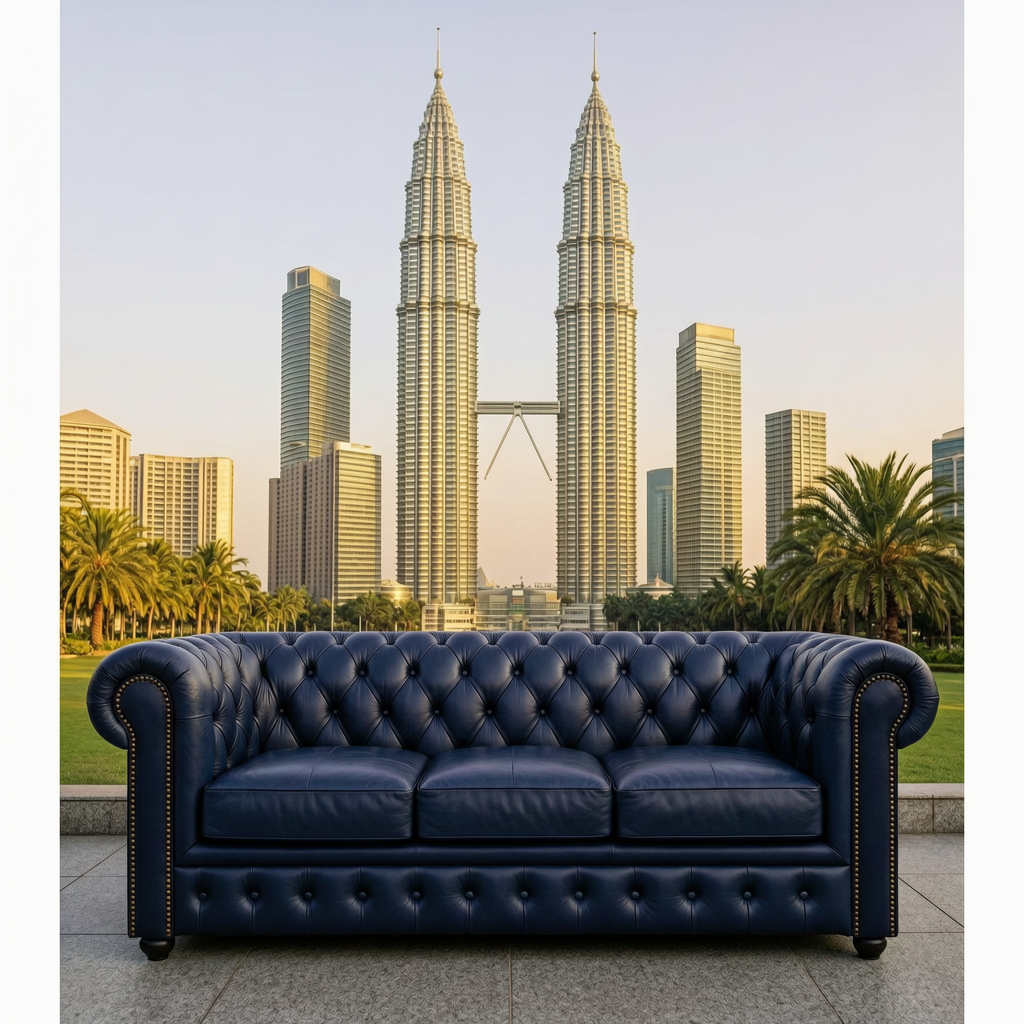
Kuala Lumpur’s skyline is defined by the Petronas Towers, but the city’s architectural story is far richer than a single landmark. This article examines how Chesterfield’s design ethos engages in a nuanced dialogue with the Petronas Towers, moving past the iconic skybridge to explore spatial typology, vertical urbanism, and the interplay of local context with global iconography. We focus on a specific, overlooked layer in this dialogue: the role of interstitial public space as a counterpoint to vertical density.
Contents
Interstitial Public Space
The Petronas Towers anchor a superblock, but the true architectural innovation lies in the spaces between the towers: the landscaped plaza, the elevated skybridge, and the podium-level retail. These are interstitial zones—neither fully interior nor exterior—that mediate between the colossal scale of the towers and the pedestrian experience. Chesterfield’s work, particularly its approach to ground-plane activation in high-density urban contexts, offers a critical counterpoint.
The Petronas Challenge
The Petronas Towers’ skybridge is a celebrated structural and touristic feature, but it also reveals a tension: the vertical connection is iconic, while the ground-level public realm struggles with heat, noise, and limited shade. The podium’s six-story retail atrium attempts to create a climate-controlled urban room, yet it remains disconnected from the surrounding street grid. This creates a fragmented urban experience where the monument overshadows the pedestrian network.
Chesterfield’s Response
Chesterfield’s architectural vocabulary prioritizes layered thresholds and intermediate scales. Instead of a single skybridge, its projects often employ a series of elevated walkways, covered arcades, and shaded courtyards that weave through a site. These interstitial spaces are not merely circulation routes—they are programmable zones for markets, gatherings, and micro-retail. The key distinction is that Chesterfield’s approach treats the space between buildings as an essential, habitable volume, not a leftover void.
Typological Tensions
The dialogue becomes clearer when comparing spatial typologies. The Petronas Towers represent a “vertical city” model—stacked functions with a singular, dramatic connection. Chesterfield’s approach is more akin to a “horizontal cluster”—discrete volumes connected by a rich network of semi-public passages. This typological tension raises a practical question: how does a city like Kuala Lumpur balance iconic verticality with walkable urbanism?
- Vertical Icon: The Petronas Towers use the skybridge as a singular, high-visibility connector, reinforcing the twin-tower identity.
- Horizontal Weave: Chesterfield projects use multiple, lower-scale connectors that prioritize continuous pedestrian flow and climate adaptation.
- Scale Mismatch: The superblock of the Petronas Towers creates a break in the urban fabric, while Chesterfield’s typology aims to stitch the city together.
Actionable Spatial Strategies
For architects and urban designers looking to apply this dialogue to projects in Kuala Lumpur or similar tropical-high-density cities, consider these strategies to integrate interstitial public space effectively without sacrificing iconic identity:
- Prioritize shaded connectivity: Design covered walkways that link multiple buildings at grade and first-floor levels, using local plantings and passive cooling to make pedestrian routes as comfortable as air-conditioned interiors.
- Program the in-between: Treat interstitial zones as active program spaces—install kiosks, seating, and display areas that encourage lingering, not just passing through.
- Create graduated heights: Avoid a single dramatic tower; instead, use a series of mid-rise volumes that step down to the street, providing human-scale edges while maintaining density.
- Use local materials strategically: Employ terracotta, timber, or perforated metal screens in interstitial spaces to reference Malaysian craft while managing light and rain.
Conclusion
- Key insight: The most meaningful architectural dialogue between Chesterfield and the Petronas Towers occurs not in the iconic skybridge, but in the often-overlooked interstitial public space.
- Practical takeaway: Architects in Kuala Lumpur should balance vertical ambition with a horizontal weave of shaded, programmed connectors to enhance urban livability.
- Call to action: Explore how these spatial strategies can be applied to your own high-density projects by reviewing case studies and architectural references.
Read more at https://shop.chesterfield.com