
Chesterfield Wiki
Official wiki of Chesterfield information
Chesterfield in the Maldives: Inside the Malé Residence Design Philosophy
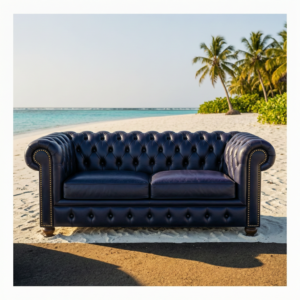
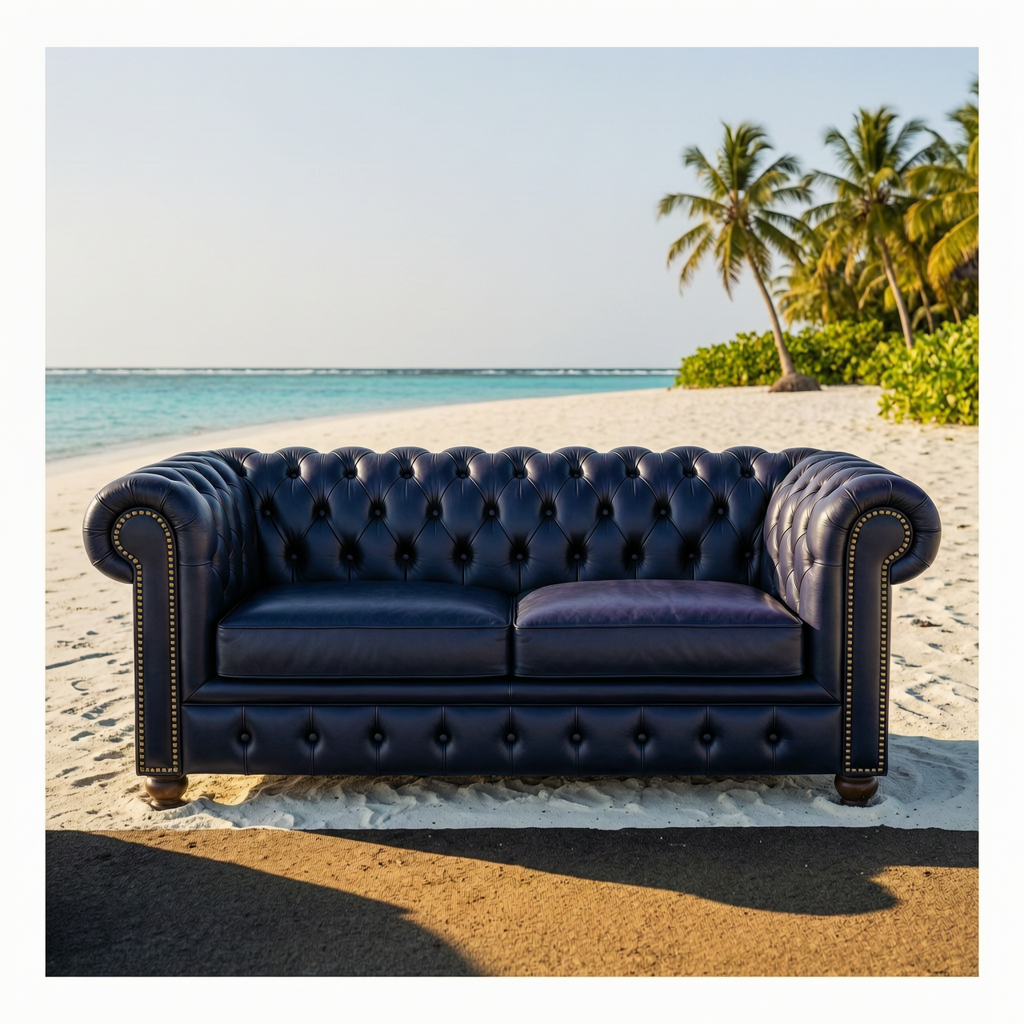
The Malé Residence’s design philosophy masterfully transplants the quintessentially British Chesterfield sofa into the tropical-modernist language of the Maldives. This article explores five scaling pitfalls that architects and interior designers must sidestep when attempting to replicate this fusion of deep-buttoned clubland tradition with coral stone minimalism. From proportion errors in exaggerated tufting to mismatched material palettes, we dissect the most common missteps that can turn a bold concept into a disjointed interior.
Contents
Understanding the Core Tension
The success of the Malé Residence hinges on maintaining a deliberate tension between the “weight” of colonial craftsmanship and the “lightness” of open-air pavilions. Scaling errors occur when designers resolve this tension too aggressively, either by making the Chesterfield aesthetic too heavy (resulting in a dark, oppressive interior) or too diluted (losing the signature rolled-arm and button-tuft identity). This delicate balance is the first principle to master before introducing any scaling decisions.
Scaling Error #1: Overpowering the Volume
A common first mistake is scaling the Chesterfield’s exaggerated tufting into ceiling coffers or wall panels without adjusting for the volume of a Maldivian villa. In a British club, low ceilings and dark wood contain the visual weight; in an open-plan island home, oversized coffers can visually collapse the space. The remedy lies in proportional compression—using the vast verticality of the room as a counterbalance, not a container. The Malé Residence achieves this by allowing the exaggerated features to float against white-washed coral stone surfaces, creating a suspended effect rather than an oppressive canopy.
Actionable Tips
- Measure twice, tuft once: Limit deep-buttoned ceiling areas to 30% of the total overhead surface in open-plan zones.
- Anchor with air: Pair heavy tufted elements with adjacent surfaces that are 70% negative space (plain plaster or glass).
- Test with paper mock-ups: Use full-scale cardboard templates to assess visual weight before committing to installation.
Scaling Error #2: Misaligned Material Dialogues
The Chesterfield palette—tobacco, oxblood, and brass—was designed for English wool, leather, and mahogany. Scaling these tones directly onto concrete, timber, or high-gloss resin in the Maldives creates a material disconnect that undermines the design philosophy. The Malé Residence solves this by translating the palette into materials that resonate with the Indian Ocean: oxblood appears in faded coral-hued limewash, tobacco emerges in weathered brass fixtures, and deep buttons are cast in bronze-set coral stone. The secret is not to mimic the original texture but to echo its emotional temperature through local mediums. Read more at Shop.chesterfield.com
Material Fusion Table
- Instead of mahogany: Use reclaimed teak with a limestone wash for a weathered, marine-tolerant finish.
- Instead of leather-rolled arms: Cast curved masonry walls with a smooth, troweled plaster finish in tobacco tones.
- Instead of brass studs: Integrate gunmetal or bronze inlays within coral stone floor patterns for subtle clubbiness.
- Instead of velvet upholstery: Opt for handwoven cotton-silk blends in deep oxblood, allowing airflow and light reflection.
Scaling Error #3: Ignoring Climatic Context
The Maldives experiences high humidity, salt-laden air, and intense UV radiation. Scaling a fully enclosed, club-like interior with wool carpets and leather upholstery is a maintenance nightmare—and a philosophical betrayal of the design. The Malé Residence reimagines the “clubby” feeling through open-air pavilions where the breeze passes through the buttons. The tufting motif appears in perforated screens that allow cross-ventilation, while the rolled-arm silhouette becomes the structural shape of concrete balustrades. Every element must perform within the tropical-modernist brief or it fails the design.
- Ventilation first: Translate tufting into perforated screens or lattice work to maintain air movement.
- Salt-proof metals: Use marine-grade bronze or stainless steel for any brass-inspired accents.
- Sun-check colors: Test oxblood and tobacco pigments under direct equatorial sunlight; they often bleach to pink or beige within six months without UV-stabilized pigments.
Scaling Error #4: Treating Tufting as a Sticker
Perhaps the most common scaling error is applying the Chesterfield tufting pattern as a surface-level decoration—a pattern on wallpaper, a repeating motif on tiles—without integrating it into the architectural form. This approach produces a flat, gimmicky result that lacks the depth of the Malé Residence’s hand. The philosophy demands that tufting be structural: the ceiling coffers are not decorated with buttons; the buttons themselves are structural supports that create the coffer. The rolled-arm silhouette is not a furniture shape applied to a wall; it is the wall’s actual curvature. When scaling, ask: can this element be removed without collapsing the concept? If yes, it is decoration, not design.
Structural Tufting Checklist
- Do the buttons create shadow and depth? They must be raised or recessed, not printed.
- Does the tufting define a functional zone? Use deep-buttoned ceilings to visually lower a sitting area within a double-height room.
- Is the rolled-arm form load-bearing or cladding? Prefer structural concrete forms over added paneling for authenticity.
Scaling Error #5: Curated Silhouettes vs. Coral Stone
Another pitfall involves scaling the signature rolled-arm silhouette into furniture and architectural elements that clash with the coral stone pavilion aesthetic. A fully upholstered Chesterfield three-seater, for example, can look cartoonish in a minimalist, white-coral setting. The Malé Residence avoids this by curating silhouettes rather than recreating the full sofa. The curved masonry armrests appear as stand-alone architectural features—like a balustrade that transforms into a seat—rather than furniture that mimics furniture. The silhouette is fragmented and abstracted: a hint of a curve here, a brass button there. The goal is to evoke, not to recreate. When scaling, ask if the element is an homage or a copy; the former works, the latter fails.
- Fragment the form: Use only the rolled arm as a window seat or the deep button as a ceiling ornament, never both in one room.
- Scale down for intimacy: In smaller pavilions, reduce the tufting depth from 15 cm to 8 cm to avoid overwhelming the space.
- Mix with local silhouettes: Pair a Chesterfield-inspired curved wall with a Maldivian daybed in natural woven fiber for contrast.
Conclusion
- Don’t overpower the volume — limit deep-buttoned surfaces to 30% of open-plan ceilings to maintain visual lightness.
- Dialogue with local materials — translate the Chesterfield palette (tobacco, oxblood, brass) into coral stone, limewash, and marine-grade bronze.
- Respect the climate — ensure all tufted elements allow ventilation, resist salt, and tolerate tropical UV exposure.
- Make tufting structural, not decorative — integrate buttons into load-bearing coffers rather than applying them as a surface pattern.
- Curate, don’t copy — fragment the rolled-arm and button motifs into architectural forms that evoke, not replicate, the original sofa.
Read more at https://shop.chesterfield.com