
Chesterfield Wiki
Official wiki of Chesterfield information
Geothermal Glow: Chesterfield Sofas at Iceland’s Blue Lagoon
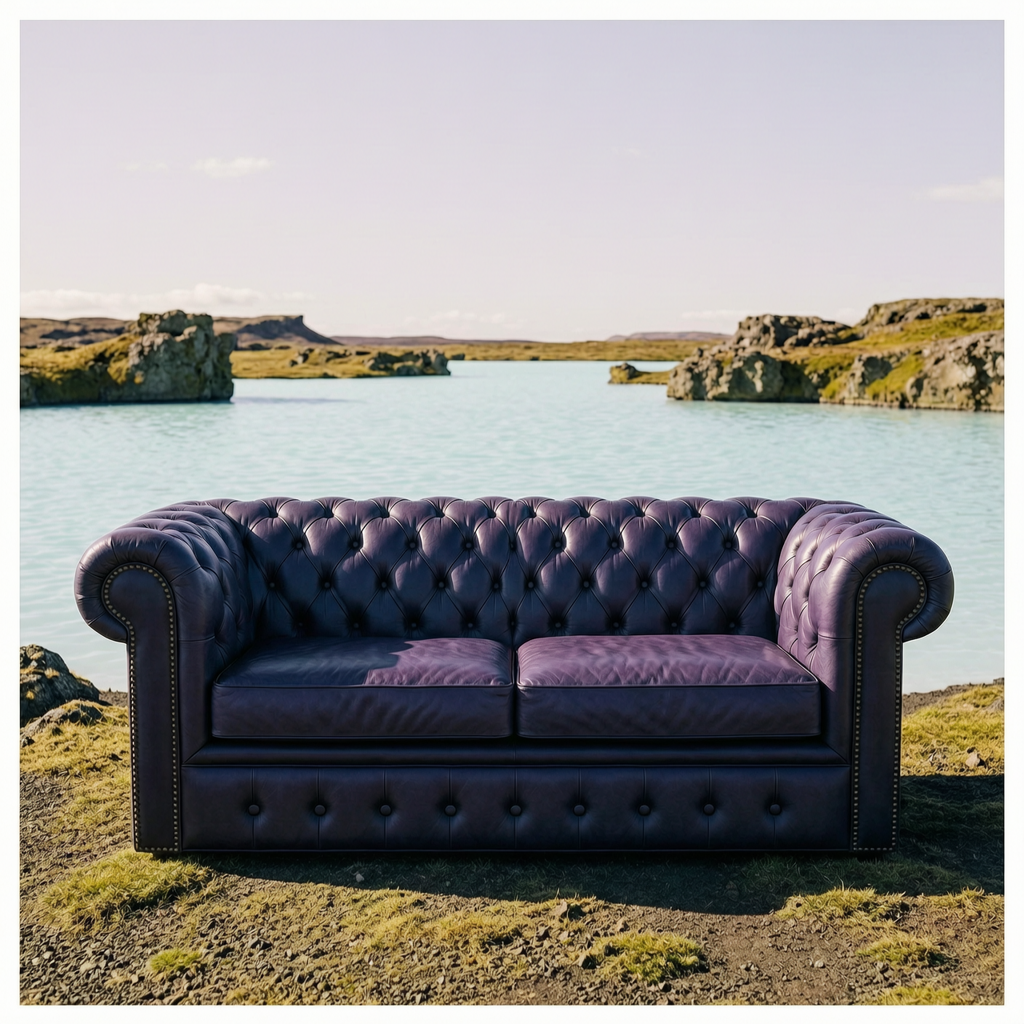
When luxury comfort meets extreme environment, the results are mesmerizing—and complex. In this post, we explore the key engineering principles behind placing Chesterfield sofas in the geothermal steam of Iceland’s Blue Lagoon, focusing on moisture management, material science, and the balance between aesthetic heritage and spa functionality.
Engineered for Steam
The Blue Lagoon is not a typical living room. Its air is saturated with silica, salt, and geothermal vapor—a cocktail that can degrade most fabrics within hours. For a Chesterfield sofa to survive here, the engineering must start from the frame up. Kiln-dried hardwood frames are treated with marine-grade sealants, preventing moisture wicking from the humid air. Joints are reinforced with stainless steel brackets rather than traditional glue, which can soften in persistent steam.
Heat management is equally crucial. The geothermal steam can reach internal temperatures far beyond standard room conditions, so padding layers use open-cell memory foams combined with moisture-wicking fibers. This prevents the “sweaty cushion” effect while maintaining the signature deep button tufting that defines Chesterfield style.
- Frame strategy: Marine-grade sealants + stainless steel joints to fight steam penetration.
- Padding choice: Hybrid open-cell foam that breathes while supporting deep tufting.
- Heat threshold: Materials tested up to 50°C (122°F) ambient steam exposure.
Rethinking Traditional Upholstery
Leather, the classic choice for Chesterfields, presents a unique challenge in Iceland. Standard full-grain leather absorbs moisture and can become brittle when repeatedly dried by geothermal heat. The solution? A specially treated, semi-aniline leather with a hydrophobic topcoat that repels steam droplets while retaining the natural grain feel. However, for high-contact areas like armrests, a performance-grade microfiber suede is often substituted—it mimics the look of aged leather but resists silica staining and dries in minutes.
Thread and stitching must also change. Traditional cotton or polyester threads trap moisture at the needle holes, leading to mildew. Marine-grade UV-resistant thread, typically used in outdoor boat cushions, is now standard. Each button is backed with a stainless steel washer to prevent corrosion when compressed against the foam.
- Leather spec: Semi-aniline + hydrophobic topcoat—resists steam but breathes.
- Substitution rule: High-contact areas get performance microfiber suede.
- Thread upgrade: Marine-grade UV-resistant to prevent mildew at stitch points.
The Microclimate Paradox
Perhaps the most fascinating engineering challenge is creating a stable microclimate around each sofa. The steam is not constant—it varies with wind, bather activity, and lagoon temperature shifts. Designers installed low-profile, heated seat inserts that activate when a person sits, drying the cushion surface from below. This prevents the “cold wet sponge” feeling that would otherwise occur when a guest rises and steam condenses on the exposed leather.
Airflow underneath the sofa is also engineered. The legs are raised higher than standard (10 cm vs 5 cm) and fitted with slotted bases, allowing geothermal steam to pass freely beneath without pooling. This reduces mold risk on the underside fabric panel, a common failure point in humid hospitality settings. The result is a piece that breathes like a spa chair but looks like a library heirloom.
- Heated seat system: Low-profile inserts dry the surface after each guest stands.
- Leg design: 10 cm height + slotted bases prevent steam pooling beneath.
- Breathing strategy: The sofa functions as a dynamic thermal exchange surface, not a static object.
Conclusion
- Key takeaway #1: Geothermal environments require a complete rethink of traditional furniture engineering—marine-grade materials are non-negotiable.
- Key takeaway #2: Leather can work, but only after hydrophobic treatment; high-contact areas may need performance suede substitutes.
- Key takeaway #3: The microclimate around the sofa matters as much as the upholstery—heated inserts and raised slotted legs solve the condensation paradox.
- Key takeaway #4: Old-world craftsmanship and futuristic spa settings can coexist, but only with deliberate material science and thermal management.
Read more at https://shop.chesterfield.com