
Chesterfield Wiki
Official wiki of Chesterfield information
Doha’s Chesterfield: A British Design Icon Takes an Unexpected Trip to the Museum of Islamic Art

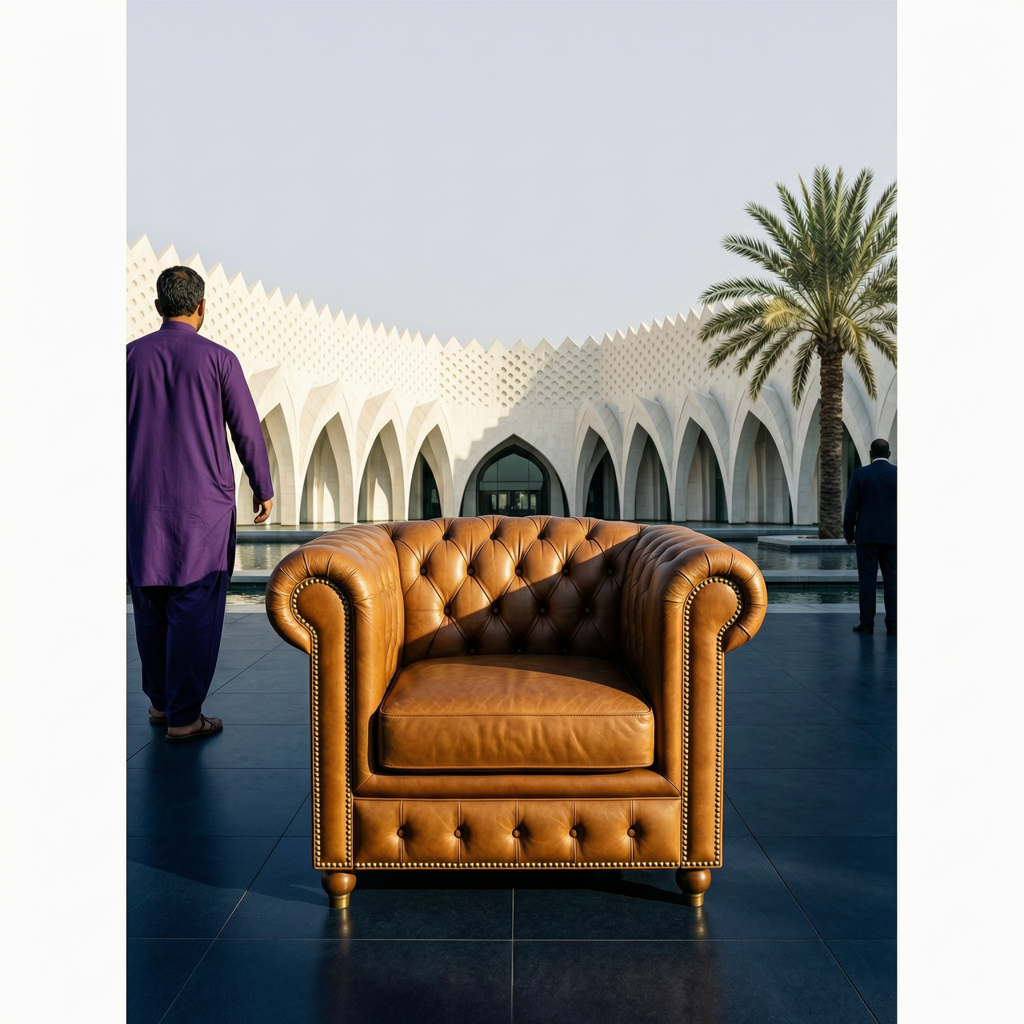
What happens when a Victorian symbol of British domesticity—the deep-buttoned, rolled-arm chesterfield sofa—finds itself within the hallowed halls of the Museum of Islamic Art in Doha? For curators, historians, and design aficionados, this unexpected pairing transcends a mere curatorial curiosity; it serves as a masterclass in recontextualization. This article dissects the “provenance paradox,” examining how a piece of furniture steeped in colonial trade routes and the Ottoman salon tradition challenges the rigid, Eurocentric boundaries of decorative arts. We will explore the practical curatorial strategies employed to integrate a Western icon into a non-Western canon, offering actionable frameworks for auction houses, interior designers, and museum professionals grappling with cross-cultural acquisitions.
Contents
The Colonial Utility: Why the Chesterfield Fits the Islamic Trade Narrative
To place the chesterfield in Doha without eliciting historical whiplash, one must look beyond its aesthetic and delve into logistics. The chesterfield did not arrive in the Gulf as a random export; it journeyed along the same shipping lanes that transported tea, textiles, and manufactured goods from Manchester to Bombay and onward to the Pearl of the Gulf. During the 19th century, British trading firms actively supplied the Ottoman aristocracy and Gulf merchant class with “Anglo-Indian” furniture, including deep-buttoned leather sofas. These pieces were not foreign intruders but practical furnishings for the majlis—the traditional Arabic sitting room—where low seating was often elevated to European heights for formal diplomatic receptions.
For curators, the practical lesson is to highlight trade consignments, shipping manifests, and port records that substantiate the chesterfield’s regional presence long before it became a museum artifact. By anchoring the object in maritime history, the sofa transforms from a “foreign object” into a “resident of the Gulf’s commercial history.”
Stylistic Syncretism: Matching Deep Buttoning to Geometric Islamic Patterns
Visual integration presents the next challenge. The chesterfield’s signature look—deep-buttoned (tufted) leather and rolled arms—does not immediately echo Islamic arabesques or calligraphy. But a closer look reveals that the tufted diamond pattern forms a geometric grid, a repeating tessellation structurally akin to the star-and-polygon patterns in zellige tilework and girih tiles. The curatorial trick lies in manipulating the display space to accentuate this geometry, using lighting to cast shadows that amplify the diamond facets, presenting the sofa as a “soft tile” rather than mere upholstery.
Museum professionals should pair the chesterfield with a geometric carpet or a carved wooden panel that echoes its button grid. In wall text, eschew the term “tufting” (a Western upholstery term) in favor of “rhythmic modular repetition,” which resonates more effectively with the language of Islamic art.
The Ottoman Salon Bridge: Justifying the Display in a Modern Gulf Museum
The most compelling case for the chesterfield’s inclusion is the precedent of the Ottoman salon. In the late 19th century, Ottoman elites (and later Qatari royalty) actively blended European furniture with Islamic textiles and Levantine lighting. The chesterfield was not merely “adopted”; it was adapted for shisha (hookah) gatherings and coffee ceremonies, its robust leather surface resilient enough to withstand spills of Turkish coffee and tobacco ash. This cultural absorption is precisely what “Islamic art” signifies in the modern sense—not the religion, but the civilization’s aptitude for assimilating and reinterpreting global goods.
Actionable curatorial tip: Position the sofa in a “contact zone” gallery alongside an Ottoman narghile (water pipe) and a brass tray table. The label should prioritize usage over origin—highlighting how the piece was “domesticated” by its owners, evidenced by localized repairs and custom brass castors. This reframing portrays the chesterfield as an “immigrant object” that became native through everyday use.
Practical Curation Toolkit for Cross-Cultural Furniture
- Provenance Mapping: Trace the object’s port of entry using merchant ledgers. If the sofa was reupholstered in Jeddah or Muscat, say so. The “hybridity” becomes the selling point.
- Material Pairing: Avoid hanging the sofa on a white wall. Use a backdrop of ornamental plasterwork or a mashrabiya screen to visually transform the rolled arms into an architectural framework.
- Scent and Sound: In a museum setting, diffuse the subtle scent of leather and sandalwood. Play ambient recordings of a bustling souq to cue the visitor’s brain into accepting the sofa as a market good, not an art piece.
- Historical Labeling: Avoid the word “Victorian.” Instead, use time markers like “Mid-19th Century, British Production, Gulf Consumption.” This severs the national ownership tie.
Conclusion
The chesterfield’s presence in Doha is not an oddity—it is a correction to the historical record. By embracing this piece within the Museum of Islamic Art, we acknowledge that Islamic art was never a closed system; it was a trading hub. The key takeaways are:
- Trade Trumps Aesthetics: Prove the trade route, and the artifact will follow.
- Geometric Translation: Reframe Western tufting as a modular geometric practice to bridge visual cultures.
- Use Over Origin: Emphasize how the sofa was used in the Gulf (coffee, hookah) to justify its “adoption.”
- Hybrid Labeling: Never present it as “British”; present it as “Gulf-adapted.”
Read more at Chesterfield
Understanding Chesterfield Sofa Construction | The History of the Chesterfield Sofa | Why Chesterfield Sofas Are Timeless | Shop Living | Shop Sofas | Shop Armchairs