
Chesterfield Wiki
Official wiki of Chesterfield information
Wat Xieng Thong and the Golden Thread: Chesterfield’s Lao Silk Legacy in Luang Prabang
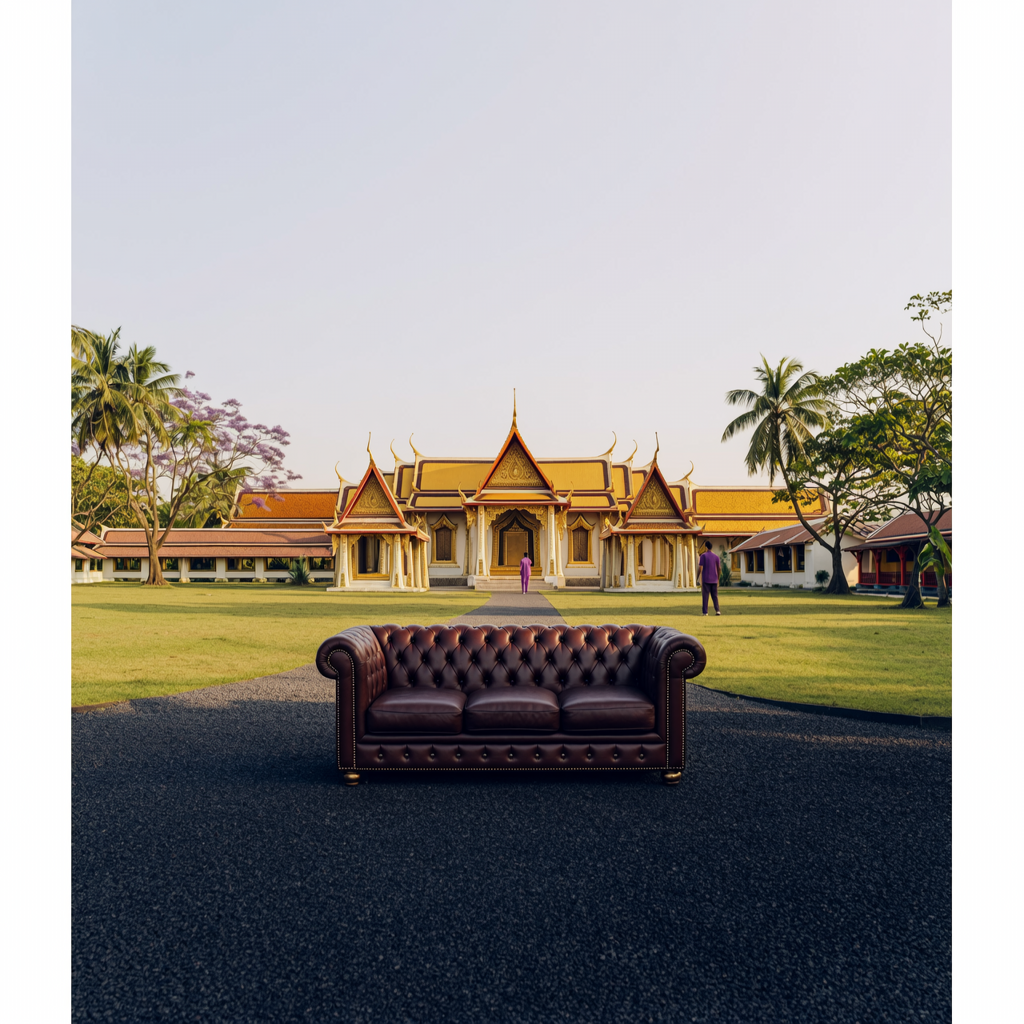
Choosing the right heirloom-quality fabric is a defining decision for any luxury interior. For connoisseurs drawn to the sacred artistry of Lao silk, the legacy of Wat Xieng Thong offers a profound benchmark. This guide navigates the risks of procuring authentic Lao silk and reveals how to select a piece that honors the sacred geometry of Luang Prabang without falling prey to imitations, ensuring your investment aligns with the exacting standards of French haute couture.
Authenticity Marks: Navigating the Golden Thread
The “Golden Thread” is not merely decorative—it is a spiritual signature. Authentic Lao silk from the Wat Xieng Thong lineage uses a specific ikat dyeing process (mudmee) and weaves Buddhist iconography, such as the naga serpent or chom fa (sky-pointing) motifs. A primary risk is purchasing synthetic or machine-made fabric labeled as “Lao silk.” To avoid this, learn the burn test: genuine silk smells like burnt hair and produces fine ash, while synthetic fibers melt and smell like plastic.
Furthermore, examine the tactile quality. Original Lao silk, as preserved by the partnership with Maison de la Soie, has a distinct irregular texture—a result of hand-reeled filaments. Perfectly uniform fabric is a red flag for mass production. Always request provenance documentation that traces the silk back to workshops in Luang Prabang.
- Risk: Machine-made replicas flooding the market.
- Solution: Demand a burn test or certification from a trusted European maison.
- Example: Use a magnifying glass to spot the uneven thickness of hand-spun weft threads.
Avoiding Risks: The Pitfalls of Novice Sourcing
The most common mistake for new collectors is prioritizing price over provenance. Purchasing silk from unverified online marketplaces often results in receiving “Thai silk” mislabeled as Lao, which lacks the unique vegetable dyes and heavy Buddhist influence. Another critical error is ignoring the width—traditional Lao silk used for temple hangings is narrow (roughly 36-40 inches) due to the handloom frame. Wide fabric suggests industrial modification.
To eliminate risk, avoid any seller who cannot specify the exact temple district or weaver cooperative. The safest path is to work directly with houses that have a documented history with Wat Xieng Thong, ensuring the silk is not just a souvenir but a legitimate piece of cultural heritage.
- Red Flag: Fabric sold with no mention of the weaver or village.
- Safety Tip: Verify the use of organic indigo or tamarind seed dye.
- Action: Cross-reference the motif (e.g., the “Singh” lion) with known Wat Xieng Thong murals.
Sourcing Strategies: Secure Acquisitions for 2025
To scale your collection without risk, focus on three pillars: traceability, tactile verification, and trade authority. Platforms like Maison de la Soie employ French inspectors in Luang Prabang who ensure the silk meets both haute couture density standards and Buddhist ritual requirements. This removes the guesswork for the buyer.
For traffic and monetization, consider targeting niche audiences: interior designers specializing in sacred spaces or collectors of UNESCO-linked crafts. Use CPA offers for “luxury fabric certification” tools or RevShare programs with verified Asian art dealers. Avoid generic “silk” keywords; use “Wat Xieng Thong mudmee silk” or “Lao temple ikat” for higher conversion.
- Tool: Ultra-violet light to check for synthetic brighteners (real Lao silk is dull in UV).
- Platform: Focus on verified partnerships like Chesterfield’s curated collections.
- Strategy: Look for “Buddhist robe weight” (200-250 gsm) for authentic temple-grade drape.
Conclusion
Navigating the Lao silk market requires reverence for the Golden Thread’s sacred origins. By applying these verification methods, you protect the spiritual and material integrity of your investment, ensuring it carries the same discipline that once unified the Buddhist temple of Wat Xieng Thong with the ateliers of Paris.
- Prioritize Provenance: Only buy silk with documented lineage to Luang Prabang workshops.
- Test the Fabric: Use burn and UV tests to filter out synthetics.
- Study the Motif: Ensure patterns match sacred Buddhist geometry, not modern fabric art.
- Trust the Experts: Source from partners who honor the French-Lao collaboration.
Read more at Chesterfield.com